The fastest-growing movement trend of the year is not a harder class or a heavier lift. It is a walk. Search interest in walking yoga jumped 2,414 percent heading into 2026, according to a trend report from the gym chain PureGym, and the number is less strange than it first sounds. After a decade of wellness culture measured in personal records and streak counters, a lot of people are quietly asking a different question. Not how much more can I do, but what if I did less, on purpose, and called that the training.
That is the whole idea behind recovery-first training, and it is the most useful reframing to come out of the fitness conversation in a while. The direct answer to why it matters: your body adapts and gets stronger during rest, not during effort, so the quality of your recovery sets the ceiling on everything else. Treating rest as a passive gap between real workouts leaves progress on the table. Treating it as its own practice changes how a week feels.
What Walking Yoga Actually Is
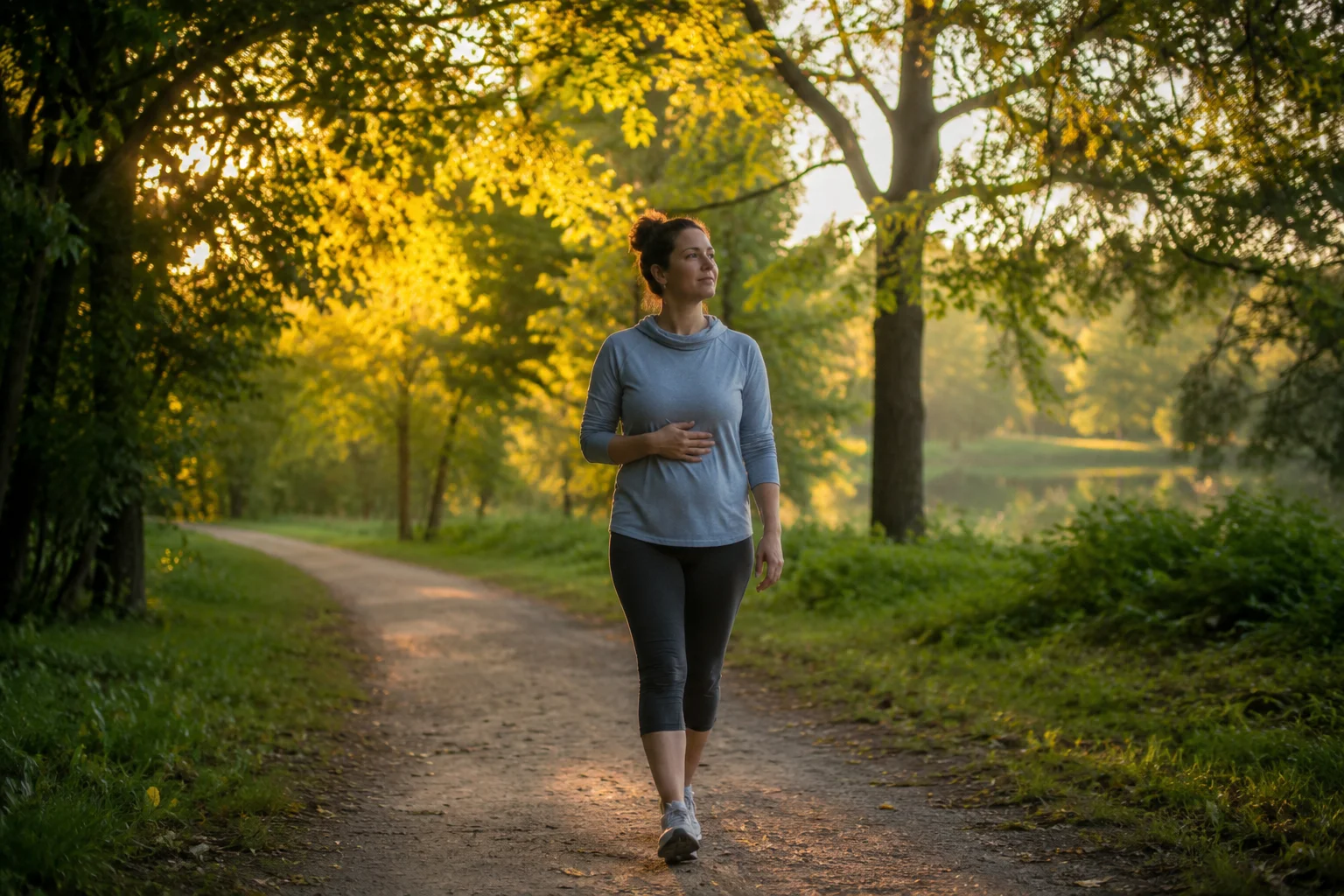
Walking yoga is exactly what it sounds like, and calmer than the trend numbers suggest. You take a walk, and you thread mindful breath and simple posture cues through it. Lengthen the spine on the inhale. Soften the shoulders on the exhale. Notice the foot rolling from heel to toe. Pause now and then for a standing stretch. It is mindful movement without a mat, and its appeal is that it asks nothing dramatic of you. No studio, no flexibility, no floor.
This fits a shift we have written about before, the slow turn away from intensity that we called the year yoga slowed down. Walking yoga is that philosophy made portable. It is the on-ramp for people who find a full practice intimidating, and it belongs in the same family as our 30-minute reset for reclaiming your body, just gentler and easier to repeat daily.
Rest Reframed as a Skill
The cultural piece here is a redefinition. Recovery used to mean the day you skipped the gym and felt vaguely guilty. Now it is being coached, tracked, and taken seriously. Stephan Muller, a director at the recovery-tech company Whoop, framed it well. "Recovery isn't the opposite of productivity, it's what makes it possible," he told The National. That sentence is doing a lot of work. It moves rest out of the failure column and into the training plan.
Some of that is being driven by data. Roughly 345 million people used fitness apps in 2024, and the wearables on all those wrists have made recovery a number people can watch. There is a risk in that, the risk of turning a nap into another metric to optimize. But the underlying message is sound. Active recovery, the light movement you do on an off day, keeps blood moving and joints loose without adding stress, and it beats both a hard session and a full stop on the couch.
The Science Is Catching Up, and It Favors Gentle
Here is the part that should reassure anyone who worries that easy movement is not real. Researchers at UCLA, led by Dr. Helen Lavretsky, studied older adults doing a gentle practice: about one hour of Kundalini yoga a week plus fifteen minutes of daily practice at home. After twelve weeks, that group showed preserved gray-matter volume in brain regions tied to memory and cognition. A comparison group doing standard memory-training exercises did not hold the same ground. The gentle practice protected the brain in a way that drilling did not.
The same UCLA work points to a tool you can use in the next three minutes. A simple boxed-breathing pattern, inhale for a count, hold, exhale, hold, each for roughly three counts, may lower blood pressure and heart rate by as much as twenty points. That is the value of gentle yoga practice in a nutshell. The dose is tiny and the return is real, which is the opposite of how most people think exercise is supposed to work.
How Breath Turns a Walk Into a Reset
The engine under all of this is the nervous system. Most of us spend the day in a low simmer of alert, and the fix is not another stimulating workout, it is a signal to the body that it is safe to downshift. Slow, even breathing sends that signal. This is why boxed breathing shows up in everything from clinical anxiety protocols to pre-race routines. Pair that breath with an easy walk and you get something more than a stroll. You get a portable reset that regulates mood and lowers the background hum.
Think of it as rest as training in its most accessible form. You are not chasing a heart-rate zone. You are practicing the skill of coming down, which is exactly the skill that a busy, wired week erodes. The people who recover well are not the ones who rest hardest. They are the ones who have rehearsed calm often enough that their body knows the way back.
There is a quiet trap worth naming here, because the recovery conversation can curdle into one more thing to grade yourself on. When every nap has a score and every walk has a target, rest stops resting you. The wearable becomes a small manager living on your wrist, and the calm you were chasing gets buried under the pressure to calm correctly. The antidote is not to throw out the data. It is to remember what the data is for. A recovery number is a hint, not a verdict, and some of the best sessions you will ever have leave no trace on any app. Walk without checking the screen. Breathe without counting toward a streak. The goal was never a perfect readiness score. It was a body that feels less braced by Friday than it did on Monday, and that outcome does not need a badge to be true.
Building a Recovery-First Week
You do not need to overhaul anything. Keep the practice you love and change the framing of the days around it. On an off day, take a fifteen-minute walk and add breath cues instead of nothing. Before bed, run two or three rounds of boxed breathing. Once or twice a week, let a session be deliberately easy and count it as a win rather than a compromise. This is low-intensity movement used with intention, and it is the missing half of most training plans.
If you want the cognitive payoff specifically, the UCLA findings suggest consistency beats intensity, which is good news for anyone who dreads a hard class. Small, daily, repeatable. That is also why we keep returning to the theme of yoga for brain health, because the research keeps landing in the same place: the practices that calm you are often the same ones that protect you over decades.
The trend line is loud, but the practice is quiet, and that is the point. Doing less is not doing nothing. Done with attention, a slow walk and a few honest breaths may be the most productive thing on your calendar this week. The body was always going to get stronger in the rest. All you are doing is finally showing up for that part.