Nearly half of American adults, 48.1 percent or about 119.9 million people, have high blood pressure under the current definition, according to the Centers for Disease Control and Prevention. Many of them will hear the same advice at a checkup: move more, eat less salt, manage stress. Some will hear the word yoga, usually with a shrug attached, as if it were a pleasant extra rather than a treatment.
Yoga lowers blood pressure by a modest amount, the effect is concentrated in practices that take breathing and relaxation seriously, and the drop is in the same general range as other forms of exercise. For a student with elevated numbers, that makes the mat a reasonable part of the plan, provided the practice is built with some care.
Stated directly: across pooled clinical trials, regular yoga reduces systolic blood pressure by roughly 4 to 10 mmHg and diastolic pressure by roughly 3 to 7 mmHg, with the larger effects in people who already have hypertension and in programs that combine postures with breathing and meditation. It works best alongside aerobic activity and medication where prescribed, not as a substitute for either.
What the Trials Measured
The evidence base is made of many small studies, and the main reviews reach compatible conclusions with different numbers. A 2013 meta-analysis led by Marshall Hagins in Evidence-Based Complementary and Alternative Medicine pooled 17 studies and found an average reduction of about 4.2 mmHg systolic and 3.6 mmHg diastolic. The authors flagged every included study as carrying unclear or high risk of bias, which is a fair description of much of the early yoga literature.
A year later, Holger Cramer and colleagues reviewed seven randomized controlled trials with 452 patients in the American Journal of Hypertension. Compared with usual care, yoga lowered systolic pressure by a mean of 9.65 mmHg and diastolic by 7.22 mmHg, with effects showing up in trials that enrolled people with diagnosed hypertension. The authors rated the evidence very low quality, mainly because the trials were small and hard to blind.
The most recent large review, published in PLOS One in May 2025 with Cramer again among the authors, pooled 30 randomized trials with 2,283 participants. Against waitlist controls, yoga reduced systolic pressure by 7.95 mmHg and diastolic by 4.93 mmHg. Against active comparison groups, such as other exercise, the systolic difference shrank to 4.16 mmHg and was no longer statistically significant, while a small diastolic advantage of 1.88 mmHg held.
That last comparison is the honest center of the evidence. Yoga clearly beats doing nothing. Against other movement, it performs about as well, not dramatically better.
Why the Breath Seems to Carry the Effect
The most interesting pattern in the data concerns what kind of yoga produces the drop. In the Hagins review, programs that included all three basic elements of practice, meaning postures, meditation, and breathing practice, lowered systolic pressure by 8.17 mmHg and diastolic by 6.14 mmHg. Programs with less yoga content, typically posture-only classes, produced no significant reduction.
A 2019 meta-analysis in Mayo Clinic Proceedings, led by Yin Wu at the University of Connecticut and covering 49 studies published between 1983 and 2018, found the same divide. Yoga that emphasized breathing and mental relaxation lowered blood pressure in people with hypertension by about 11 and 6 mmHg, compared with about 6 and 3 mmHg for practices without that emphasis. Wu was careful about how the findings should be read.
"We are not telling people to use yoga to substitute for aerobic exercise. Aerobic exercise is the gold standard for antihypertensive lifestyle therapy. But yoga provides an additional option that can be just as effective."
The physiology behind this is plausible, if not fully settled. Slow breathing with a long exhalation shifts the autonomic nervous system toward parasympathetic activity, which slows the heart and relaxes blood vessel tone, a mechanism explored in our guide to the vagus nerve and the long exhale. The Mayo analysis also gave a sense of dose, with the reviewed programs averaging roughly an hour of practice, about five times a week, over around 13 weeks.
How Yoga Compares With Other Exercise
The broadest look at exercise and blood pressure, a 2023 network meta-analysis by Jamie Edwards and colleagues in the British Journal of Sports Medicine, pooled 270 randomized trials with 15,827 participants. Aerobic training lowered resting systolic pressure by 4.49 mmHg, dynamic resistance training by 4.55, combined training by 6.04, and high-intensity interval training by 4.08. Isometric exercise, meaning sustained holds such as wall squats and handgrips, came out on top at 8.24 mmHg systolic, with the wall squat alone at 10.47.
Yoga and stretching were not part of that analysis, so it cannot rank them directly. Still, the comparison is instructive. The yoga effects in the trials above sit in roughly the same range as aerobic and resistance work, and a practice full of long holds in standing poses has more in common with isometric training than most students realize.
A small University of Saskatchewan trial, published in the Journal of Physical Activity and Health in December 2020, added a twist. Forty older adults with elevated blood pressure or stage 1 hypertension were assigned to either 30 minutes of whole-body stretching or brisk walking, five days a week, for eight weeks. The university reported that stretching produced larger reductions on its blood pressure measures, while the walkers lost more waist fat. Phil Chilibeck, the study's senior author, offered one explanation.
"When you stretch your muscles, you're also stretching all the blood vessels that feed into the muscle."
He was equally clear about the limits: "I don't want people to come away from our research thinking they shouldn't be doing some form of aerobic activity." The study was small, and outside reviewers who examined the full results found stretching ahead on only some of the measures, which is reason to treat it as a promising signal rather than a verdict. For context on how much cardiovascular work a flow class delivers, our breakdown of whether yoga counts as cardio runs the numbers.
Where the Guidelines Stand
The 2025 blood pressure guideline from the American Heart Association and American College of Cardiology, released in August 2025, addresses stress reduction as an adjunct to lifestyle change and medication for the first time, with transcendental meditation named in the recommendation. The Preventive Cardiovascular Nurses Association has since summarized the stress-reduction options for patients as meditation, controlled breathing, yoga, and mindfulness practice. The core lifestyle advice still rests on diet, sodium, weight, alcohol, and regular physical activity, and a yoga practice belongs inside that framework rather than in place of it.
How to Start Safely With High Blood Pressure
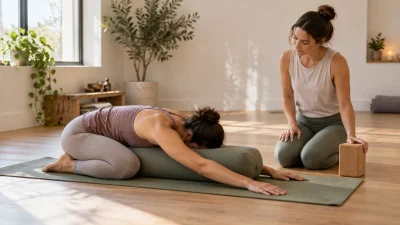
Anyone with diagnosed hypertension should talk with their clinician before beginning a new practice, especially if medications are still being adjusted. Starting points that match the evidence are gentle or slow-flow classes, restorative and hatha formats, and any class that devotes real time to breathing and a guided relaxation at the end. Fast, heated, or competitive classes are a later step, if they come at all.
Two adjustments matter most. The first concerns inversions. Harvard Medical School's health publications advise that advanced inversions such as shoulder stand, headstand, and handstand are probably not a good idea for people with high blood pressure, while Darshan Mehta of Harvard Medical School has said downward-facing dog is generally fine for people whose pressure is well controlled. The second concerns the breath itself. Breath retention, which appears in some pranayama practices, can raise blood pressure, so students with hypertension should keep the breath moving and skip the holds.
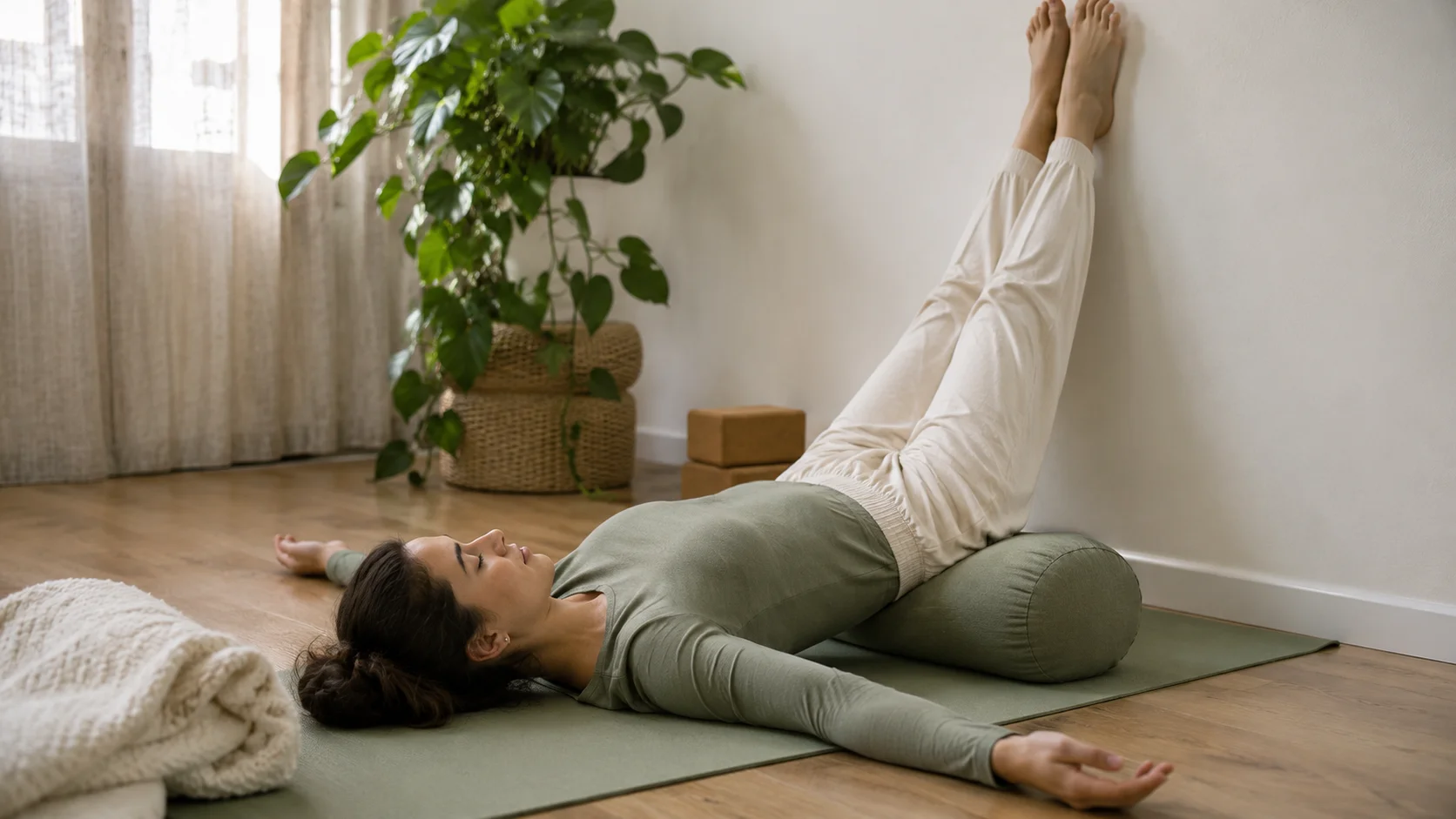
Tell the teacher before class. A good instructor will offer supported alternatives, such as legs up the wall in place of a shoulder stand, and will avoid cueing long breath holds without options. Rise slowly from forward folds and floor work, since lightheadedness on standing is more common for people taking some blood pressure medications.
Then measure. A home cuff, used at the same time of day for a few weeks before and after starting a regular practice, gives you your own data rather than an average from someone else's trial. The programs in the Mayo review ran about three months at roughly five sessions a week, which makes a fair window for judging your own results, with breathing and relaxation kept in every session.