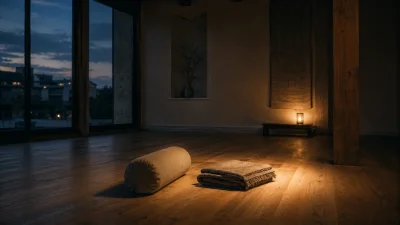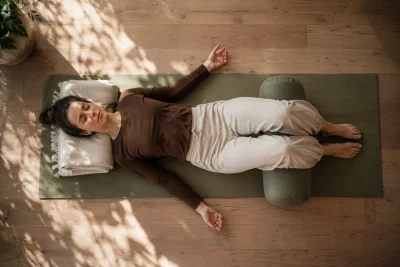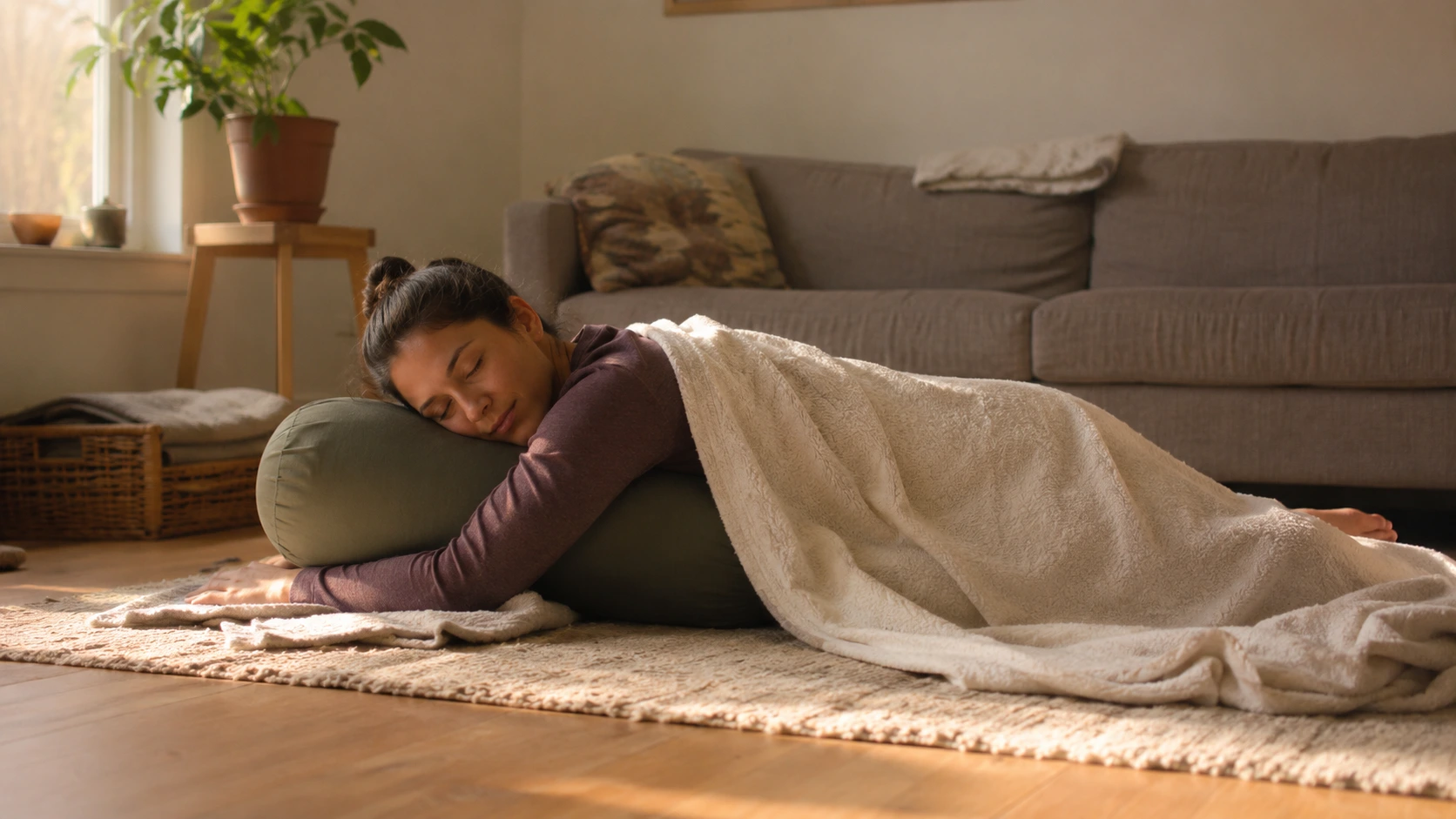
Picture two versions of the same evening. In the first, someone arranges a bolster, dims the lights to a complimentary amber, frames the shot, and holds a supported reclining pose long enough to capture it before moving on. In the second, someone lies on the floor in an common room, no audience, no documentation, and stays there until their breath slows and their shoulders finally drop away from their ears. Both look like rest. Only one of them is.
That distinction sits at the heart of the defining wellness story of the year. After a decade of grind-it-out fitness and optimization culture, 2026 is being called the year of soft wellness, a gentler and more mindful approach to health that treats rest, slowness, and gentleness as productive rather than lazy. For yoga, a practice that spent the last decade often sold as a sweaty, athletic workout, it's less a reinvention than a homecoming. The slow styles that always existed at the quiet end of the tradition are suddenly the main event.
What soft wellness actually means
The short version: soft wellness is the cultural correction to "no pain, no gain." Where the previous era prized intense workouts, restrictive diets, and the relentless tracking of every metric, this one prizes the opposite instinct. It asks not what more you can extract from your body, but what your body actually needs. The appeal is partly a response to collective exhaustion. People are tired of treating their own wellbeing as a second job, and they are increasingly skeptical that another five-day challenge or punishing bootcamp is the answer. It is worth expressing that this correction is not equally available to everyone. Critics rightly point out that slowing down often depends on stability, the flexible schedule and financial cushion that make rest feel safe rather than reckless. A practice you can do on your own floor, however, is one of the more democratic entries into this whole shift.
It helps to be honest about where this idea comes from, because the marketing tends to erase it. The broader "soft life" philosophy gained traction in Black women's communities, particularly on Nigerian social media, as a pointed rejection of struggle culture and the expectation to be endlessly strong and self-sacrificing. The revolutionary premise underneath all the candles and neutral interiors is simple. You do not have to earn rest. Rest is not a reward for suffering. That conviction is what gives slow yoga its current charge.
The science under the serenity
This is not only a mood. The body's stress response is the real subject here. Years of digital overload and chronic pressure have made nervous system regulation one of the most talked-about ideas in wellness, with the vagus nerve and cortisol management moving from clinical jargon into everyday conversation. The promise of a dysregulated nervous system is constant low-grade alertness. The promise of nervous system regulation is the opposite, a body that can drop out of fight-or-flight and into rest and repair.
Here is where yoga has an unusual advantage. The tools the wellness industry is rediscovering are ones the practice has carried for centuries. Breath control, what yogis call pranayama, is among the most direct levers available for shifting the body toward its parasympathetic state, the rest-and-digest mode where recovery happens. Slow, supported postures held for minutes at a time give the nervous system the time and safety it needs to downshift. The trend is new. The technology is ancient.
What a slow practice looks like
If your mental image of yoga is a fast, athletic vinyasa flow, the soft wellness version will feel almost suspiciously easy. Restorative yoga uses props, bolsters, blankets, and blocks, to hold the body in comfortable shapes for long stretches, often five minutes or more, so that nothing has to be worked for. Yin yoga targets the deep connective tissue with passive floor poses held patiently, building the kind of quiet flexibility that effortful stretching never quite reaches. And yoga nidra, sometimes called yogic sleep, is a lying-down guided practice that walks you toward the threshold of sleep while remaining gently awake, a profound reset that asks nothing of you but attention.
None of this requires athleticism, and that is precisely the point. If you have talked yourself out of yoga because you assumed it meant contorting into something difficult, the slow styles are the easiest possible door in, and we made the full case in our piece for people who think they cannot do yoga. Mindful movement at this pace is less about what the body can do and more about what the mind can finally stop doing.
The trap hiding inside the trend
Now for the part the wellness brands would rather skip. Soft wellness carries a quiet contradiction, and it is worth naming plainly. The moment rest becomes something you perform, it stops being rest. As one wellness practice has observed, the curated morning routine and the perfectly lit slow-living aesthetic can turn ease into another checklist, until people are effectively hustling to appear unhurried. We start chasing calm the same way we once chased productivity, through comparison and the hope of approval. That is not softness. It is the old machine wearing a linen robe.
The same trap waits inside any attempt to quantify a slow practice. The instinct to track your restorative sessions, to score your stillness, to confirm with a device that your nervous system has officially relaxed, defeats the entire exercise. This is the deeper argument we made about wearables and biometrics in our look at how your smartwatch became your yoga teacher. A readiness score cannot tell you that you have rested. Only your own attention can, and outsourcing that judgment to a graph keeps you in exactly the vigilant state the practice is meant to release.
How to actually slow down
The genuine version of soft wellness is almost boringly simple, which is what makes it hard. Schedule rest the way you would once have scheduled a workout, and protect it just as fiercely. Build one slow practice into your week with no goal attached, no photo taken, no progress logged. Let the metric be how you feel moving through your day rather than what you accomplished in it. When the guilt arrives, and it will, recognize it as a leftover from hustle culture rather than a true signal that you are falling behind.
It also helps to support the body's stress response off the mat, through sleep, time away from screens, and the unglamorous fundamentals of recovery, the kind of natural, nervous-system-minded support that complements a slow practice rather than complicating it. The aim is not to add another elaborate ritual. It is to subtract the noise until what remains is quiet enough to hear yourself in.
The most radical thing about the soft wellness shift may be that, done honestly, it produces nothing to show for it. No personal best, no streak, no shareable proof. Just a slightly steadier nervous system and an evening where, for once, you were not trying to optimize anything at all. In a culture built on visible effort, that unremarkable hour on the floor turns out to be the boldest move available. The best part is that no one ever has to see it.