There is a version of you that has thought about trying yoga at least once. Maybe you scrolled past an Instagram reel of someone folding themselves into a pretzel on a cliff overlooking the ocean, and your first thought was, good for her, but that is absolutely not me. Maybe a friend suggested a class and you responded with a polite "maybe" that both of you knew meant never. Or maybe you actually showed up once, sat in the back row, pulled something near your hip flexor during the second pose, and quietly decided that yoga simply was not built for your body.
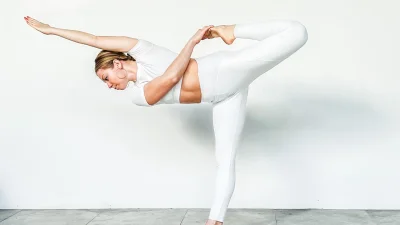
Here is what nobody told you: yoga was not built for flexible people. It was built for everyone else.
The image of yoga that dominates social media and studio marketing is a curated highlight reel, not a representation of what the practice actually is or who it is actually for. And that gap between perception and reality has quietly talked millions of people out of one of the most accessible, research-backed wellness habits available. This article is here to close that gap, one honest objection at a time.
Why Inflexibility Is the Best Reason to Start
The most common reason people give for avoiding yoga is also the most backwards one: "I'm not flexible enough." This is the equivalent of saying you are too out of shape to go to the gym. Flexibility is not a prerequisite for yoga, it is a result of it.
The way the body works, connective tissue, muscles, and fascia all respond to consistent, gentle lengthening over time. A study published in the International Journal of Yoga found that practitioners who began with significantly limited range of motion showed measurable improvements in flexibility within just eight weeks of consistent practice. You do not need to be able to touch your toes. You need to be willing to reach for them.
Your Yoga Gear Has a Dirty Secret. Closed-Loop Fabrics Are Finally Fixing It.
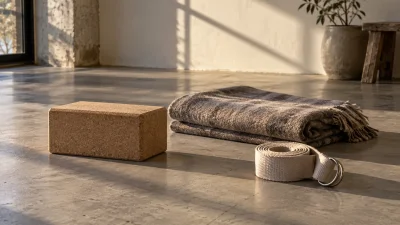
Every experienced yoga teacher will tell you the same thing: the student who arrives the most rigid leaves with the most to gain. Tight hamstrings, a stiff lower back, and locked-up hips are not obstacles to yoga. They are practically the whole point of it. Props like blocks, straps, and bolsters exist for exactly this reason, and no good instructor will ever make you feel like using them is somehow cheating.
Too Busy for Yoga? Let's Do the Real Math
The second most common objection is time, and it is a fair one. Life is genuinely full. But the time commitment for a meaningful yoga practice is far smaller than most people assume.
A consistent ten-to-fifteen minute daily practice produces real, documented results. Research published in the Journal of Clinical Psychology found that even short-duration yoga sessions, practiced regularly, reduced perceived stress and improved sleep quality in participants within one month. That is one episode of a show you have already seen, or the time it takes to scroll to a decision on a streaming service and then keep scrolling.
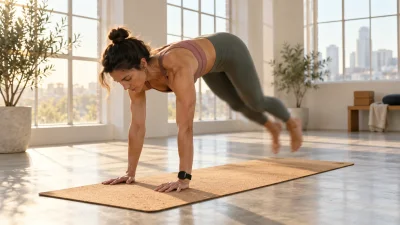
You also do not need a studio, a class schedule, or a mat that costs more than your phone bill. A clear patch of floor and a free YouTube channel are genuinely sufficient to start. The barrier to entry is lower than almost any other wellness habit, and yet the returns, including better sleep, reduced cortisol, improved posture, and stronger core engagement, rival far more demanding activities.
"I Tried It Once and It Wasn't for Me"
This one deserves real respect, because one bad experience with a poorly paced class, an instructor who assumed too much, or a style that simply did not match your body is a legitimate reason to feel put off. But yoga is not one thing. It is a wide family of practices, each with a completely different energy, tempo, and physical demand.
Vinyasa yoga is the flowing, movement-heavy style most people picture. It can be intense, fast-moving, and sweaty. It is great, but it is not the right entry point for everyone. Hatha yoga is slower and more static, focused on holding foundational poses long enough to actually feel and adjust them. Yin yoga is almost meditative, with long, passive holds designed to work deep connective tissue rather than muscle. Restorative yoga uses props to support the body completely while it releases tension passively -- some people barely move during an entire session.
The 30-Minute Reset: A Beginner's Guide to Reclaiming Your Body
If your one experience was a power flow class at 7 a.m. with an instructor who moved like the room was on fire, that is not yoga rejecting you. That is just one flavor that was not the right match. There are quieter, slower, more grounded options that might feel like a completely different practice altogether.
The Body Image Problem Nobody Talks About
Underneath a lot of yoga avoidance is something that does not always get named directly: the worry that yoga spaces are not for bodies that look a certain way. This is a real and valid concern, and it reflects a legitimate failure of how the wellness industry has historically marketed itself.
But the practice itself has no body requirement. Yoga for larger bodies, adaptive yoga, and chair yoga are all well-developed, expertly instructed disciplines that modify traditional poses in ways that maintain their full benefit. Teachers like Jessamyn Stanley have spent years making that case publicly and powerfully, showing that the range of bodies thriving in a yoga practice is far wider than any magazine cover has ever suggested.
If in-person studio anxiety is part of what is holding you back, starting at home with online classes removes that barrier entirely. Build comfort with the practice first, on your own terms, and let the community piece come when it feels right, if it ever does. Neither is required for yoga to work.
What Consistent Yoga Actually Does to Your Body and Mind
Beyond the flexibility gains and stress reduction already mentioned, a consistent yoga practice has measurable effects across a surprising range of health markers. A 2019 review published in the European Journal of Preventive Cardiology found that yoga was associated with significant reductions in blood pressure, LDL cholesterol, and resting heart rate compared to no exercise, with results comparable to conventional aerobic exercise in some categories.
For mental health, the evidence is similarly compelling. The practice stimulates the parasympathetic nervous system, the body's rest-and-digest mode, which directly counters the chronic low-grade stress response that most people carry around all day without realizing it. This is why so many practitioners describe yoga not just as a workout but as a reset, a reliable way to come back to a calmer, more grounded baseline.
Posture and joint health improve because yoga trains the stabilizing muscles that most gym routines and desk-bound workdays completely ignore. Lower back pain, one of the most common and costly health complaints in the country, has been shown in multiple clinical studies to respond well to regular yoga practice. The Annals of Internal Medicine published research finding that yoga was more effective than self-care and equally effective as physical therapy for chronic low back pain in working adults.
Your First Week: What to Actually Do
If you are ready to try a genuinely beginner-friendly starting point, here is a grounded, practical approach. Search for a beginner yin or hatha yoga class online, aim for twenty to thirty minutes, and commit to three sessions in your first week with no performance expectations attached. You are not trying to master anything. You are just introducing your nervous system to something new.
Get a mat with good grip if you can, though a non-slip surface of any kind will work for now. Wear clothes you can move in. Have a block or a thick book nearby as a prop. Do not push into pain. Discomfort and sensation are normal; sharp or shooting pain is not, and you should always back off when you feel the latter.
After your third session, notice what changed. Not how flexible you are, but how you feel. Most people report sleeping better, feeling less tense through the shoulders and neck, and noticing a small but real shift in how they handle moments of stress. That shift, quiet and undramatic as it is, is what keeps people coming back for years.
The Real Entry Point
Yoga does not require your body to be a certain shape, your schedule to have large open windows, or your personality to lean toward the spiritual. It requires about as little as any meaningful habit can: a consistent small effort, applied over time, with curiosity instead of judgment.
The version of yoga that social media sells is a performance. The version that actually changes people's lives is quieter, slower, and far more forgiving than the highlight reel suggests. You are not too stiff, too busy, too skeptical, or too anything to start. You are exactly the person this practice was built for.
The mat is ready when you are!